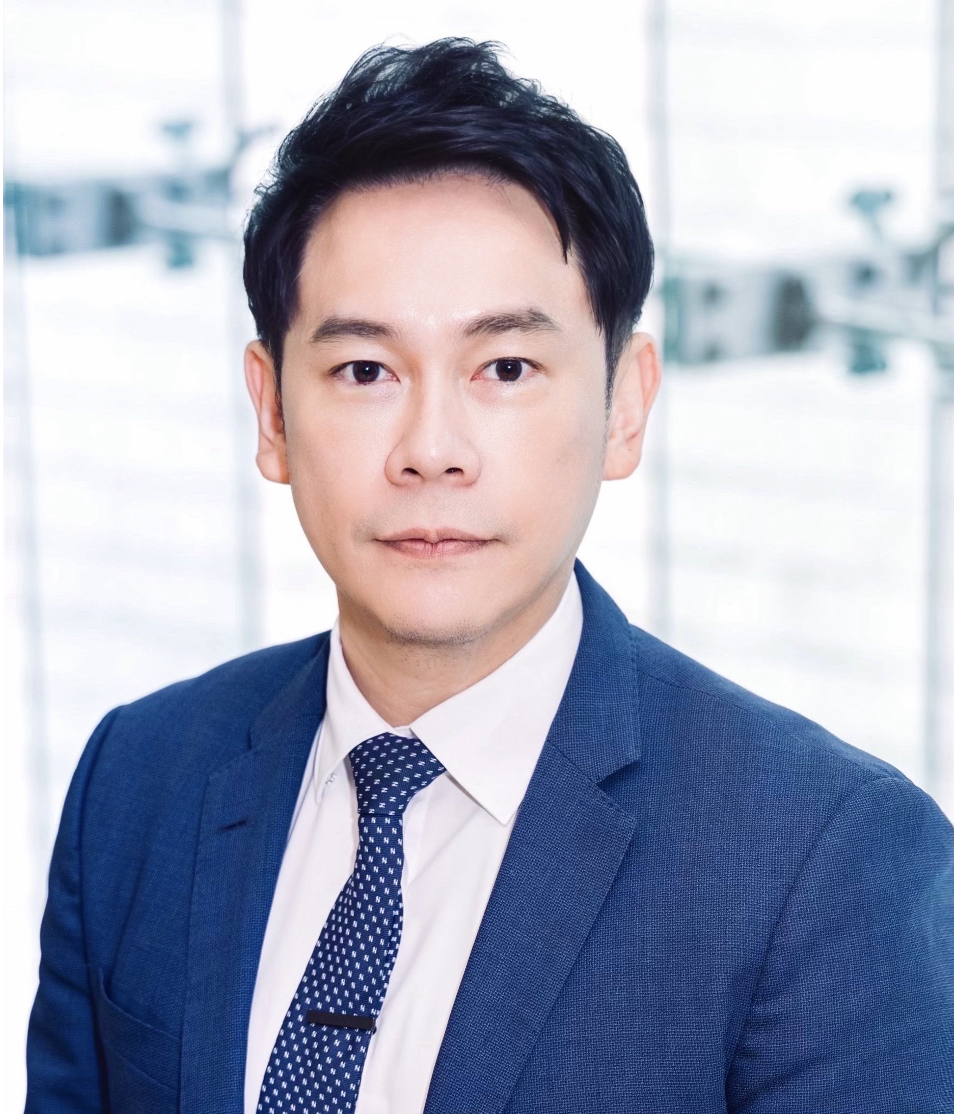
About Dr. Stanley Liu
MD, DDS, FACS · Maxillofacial and ENT-Sleep Surgeon
Restoring sleep breathing health is a gateway to wellness.
Bite. Breathing. Beauty.
The dentition, the pharyngeal (upper airway) muscles, and the facial muscles are all anchored to the same maxillofacial bones. Moving part of that bony complex can help or hurt bite, breathing, and beauty. The best treatment plan factors in all three, integrating contemporary knowledge from sleep medicine, otolaryngology, dentistry, myofunctional therapy, and maxillofacial surgery. See Dr. Liu's training background.
How he sees the work
Medicine is built to fix a single bad moment, like a broken bone or an acute infection, and it does that well. Sleep apnea is the opposite kind of problem. It builds slowly across decades, shaped by how the face and airway grew in childhood and how they keep changing with age. On top of that, there are non-anatomic factors we are only beginning to understand. A single night's study is a cross-section through a story that has been running for years, so Dr. Liu works from the whole arc: where a patient's breathing came from, what it is doing now, and where it is headed if nothing changes. Dentofacial deformity and sleep-disordered breathing did not happen overnight. Working out how things came to be is the best way to unravel them.
Sleep surgery is best seen as restoring missed milestones in facial and airway development.
Early in his career, Dr. Liu observed a pattern. A child is born premature, then mostly bottle-fed. Frequent ear and throat infections lead to ear tubes and rounds of antibiotics. Allergy testing reveals the child is allergic to many agents, "every form of plant and rock." The child falls off the growth curve, so growth hormone replacement therapy is started. Then comes the co-diagnosis of ADHD, and the child starts on stimulants. Things seem to get better.
Then the child sees an orthodontist. A number of premolar teeth are extracted, since there is not enough room in the jaws. After two years of orthodontics, the teenager is somewhat compliant with the retainer, but the bite has opened slightly in front, causing a lisp. One side of the jaw joint begins to ache, worse in the morning and accompanied by dry mouth. The teenager struggles through high school and college, often self-medicating with recreational substances.
Had this been a young woman, she would present with fatigue but without snoring or the classic, largely male signs of sleep apnea. She is more likely to be placed on antidepressants and anti-anxiety medication than evaluated for her breathing. Part of the problem is that our AHI cutoffs and symptom descriptions are drawn largely from middle-aged men.
Earlier recognition and a sleep study might have directed the child to allergy treatment, inferior turbinate reduction, tonsillectomy and adenoidectomy, or nasomaxillary expansion. Any number of these combinations might have adequately restored sleep breathing health and prevented the story above. This scenario is not uncommon. It has become a public health epidemic.
Patients often arrive with a lot of numbers from CT scans. Those numbers stay as data until they connect to a person's history, the childhood allergies, the years of orthodontics, the bed partner who describes the snoring and the pauses. A measurement only becomes information once it is tied to a need, a mechanism, and a story that runs from the past into the future. Dr. Liu starts where the patient starts, because the account of how someone actually breathes is the most reliable instrument in the room. The best measure of nasal obstruction is not a CT scan or rhinomanometry. A nasal passage that looks wider on before-and-after CT scans does not mean the patient breathes better, unless the patient tells us.
"When a patient says they don't breathe well, they don't breathe well."
Sleep surgery is not about reconstruction. Reconstruction is when a tumor is removed with the surrounding tissue, and other tissues are used to reconstruct the defect. Sleep surgery does best when it restores form, which allows the retraining of function.
The path to sleep medicine and surgery
In his own words

In the mid 1980s, techniques developed for the treatment of dentofacial deformity (DFD) were adapted and advanced by Dr. Nelson Powell and Dr. Robert Riley for the treatment of obstructive sleep apnea (OSA). Drs. Powell and Riley were community surgeons who operated at Stanford Hospital, and their approach became widely known as the "Stanford Protocol."
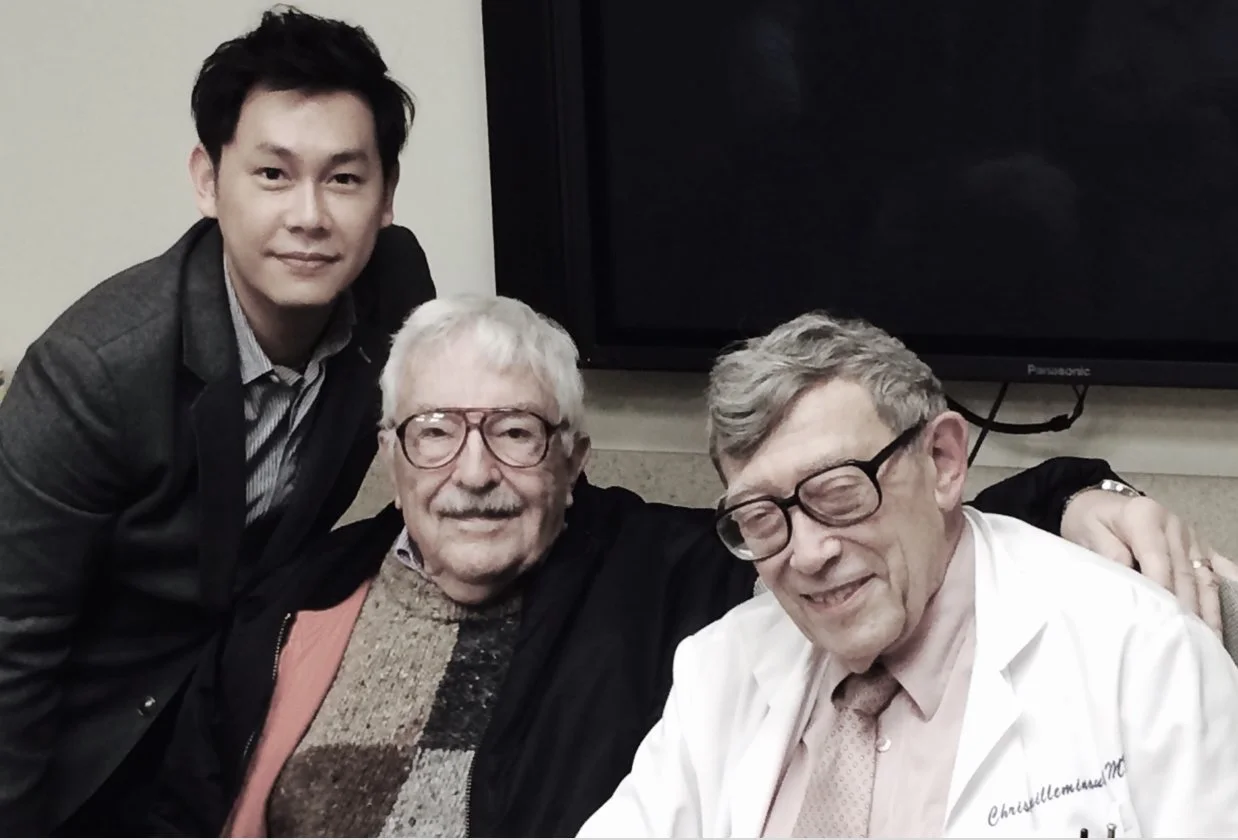
I met Dr. Nelson Powell for the first time in 2006 after spending a year at the National Institutes of Health as a Howard Hughes Medical Institute Medical Scholar. We spoke for more than two hours in his Palo Alto office, and I came away inspired to follow his path. With his support, I began my sleep surgery fellowship at Stanford in 2013 after completing my dental and medical degrees, with residency in oral and maxillofacial surgery (OMFS) at UCSF.
My fellowship year at Stanford was the last in which training was split between community and university surgeons. By this time, Dr. Powell had retired, and I became his partner Dr. Bob Riley's "right-hand man" - quite literally as Bob is left-handed, and stands at the patient's left during maxillomandibular advancement (MMA) surgery. I operated with Bob, learning MMA true to its original form. I also learned from Stanford Otolaryngology (ENT) faculty members who taught me nasal and pharyngeal surgery. I became certified in performing hypoglossal nerve stimulation (HGNS) surgery, also known as "Inspire."
In 2014, I joined the Department of Otolaryngology-Head and Neck Surgery. My decade-long tenure at Stanford thus spanned from Clinical Instructor to Associate Professor, as I also became the Sleep Surgery Fellowship Director. During the first phase of my academic career, I published over 120 peer-reviewed articles and book chapters, introduced distraction osteogenesis maxillary expansion (DOME) surgery, and presented keynote talks at conferences including the American Academy of Sleep Medicine and World Sleep Society.
From 2024 to 2026, I served as Chair of Oral and Maxillofacial Surgery and Assistant Dean of Hospital Affairs at Nova Southeastern University (NSU). I started the NSU Health Sleep and Breathe Wellness Center.
I believe that innovation in the field of sleep-disordered breathing (SDB) will come from the integration of medicine, surgery, dentistry, functional exercises, and digital health technology. I continue my passion for advancing sleep and airway health with timely interventions during developmental milestones of the face and airway.
Two decades, in numbers
Research, teaching, and lecturing across the field.
Background
Snapshot
Full background
Director, NSU Health Sleep and Breathe Wellness Center. Associate Professor, Department of Oral and Maxillofacial Surgery. College of Dental Medicine, College of Allopathic Medicine. Formerly Chair, Department of Oral and Maxillofacial Surgery, and Assistant Dean of Hospital Affairs (2024 to 2026).
Associate Professor, Department of Otolaryngology-Head and Neck Surgery. Director, Sleep Surgery Fellowship. Courtesy appointment, Division of Plastic and Reconstructive Surgery. Preceptor, Oculoplastic Surgery Fellowship.
Biodesign Faculty Fellow.
Resident, Oral and Maxillofacial Surgery. Intern, General Surgery. Medical Doctor (M.D.). Fellow, Advanced Training in Clinical Research.
Medical Scholar, Cloister Program.
Doctor of Dental Surgery (D.D.S.).
Bachelor of Science (B.S.), Biology.
Inspiration. Integration. Innovation.
Explore further: Publications · Invited Talks · In the Media · Blog
Have questions about sleep apnea, CPAP alternatives, or surgery? Start with the FAQ